How do women make home in a city that was not designed for them?
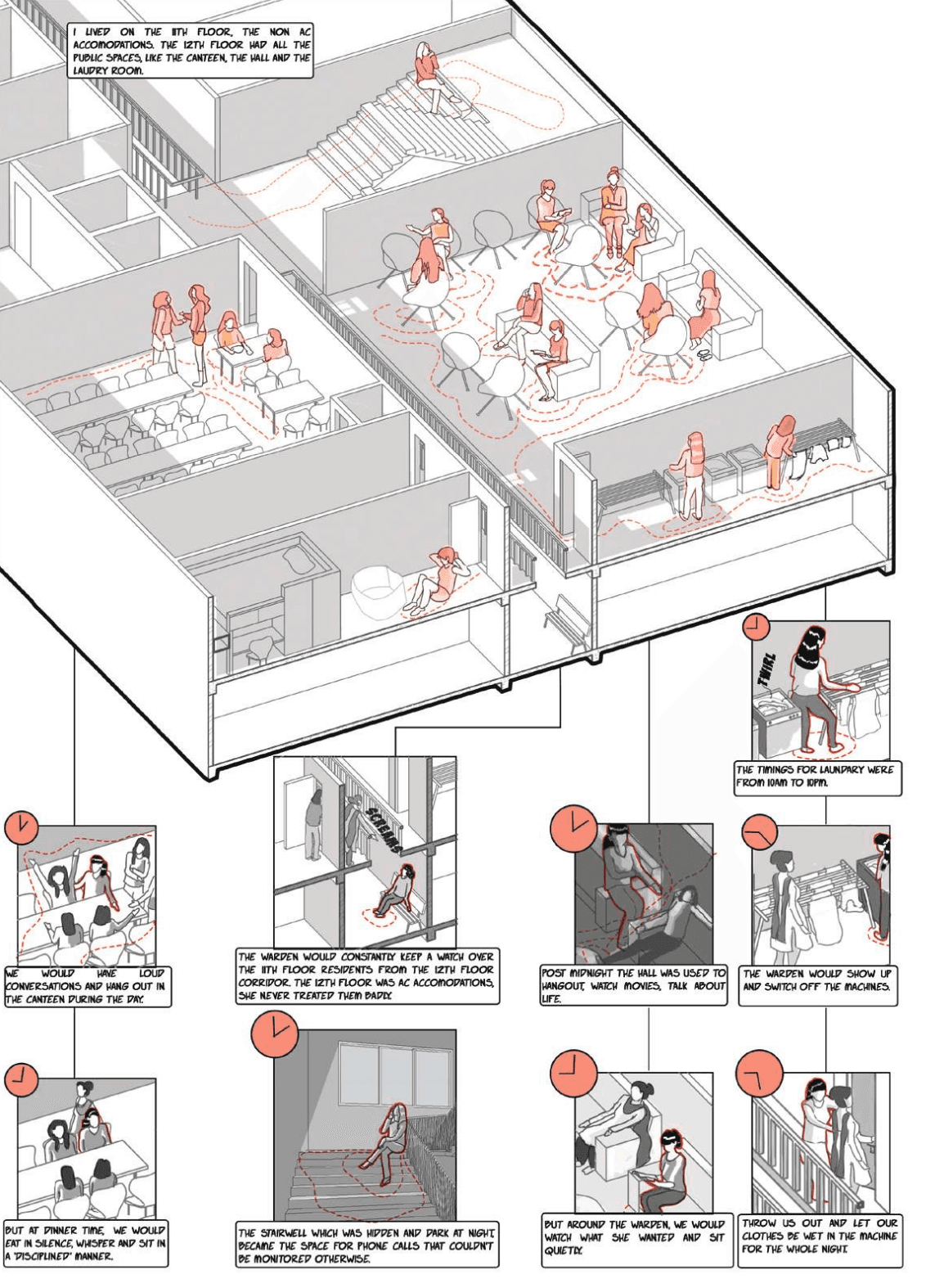
This dissertation maps the home-making practices of migrant women in Mumbai through intimate, long-form conversations documented in a graphic novel format, drawing on Virginia Woolf's stream of consciousness method. It argues that for women, home-making is not a domestic act but a spatial and political one: a slow, incremental process of claiming, negotiating, and creating fractures in patriarchal urban space.
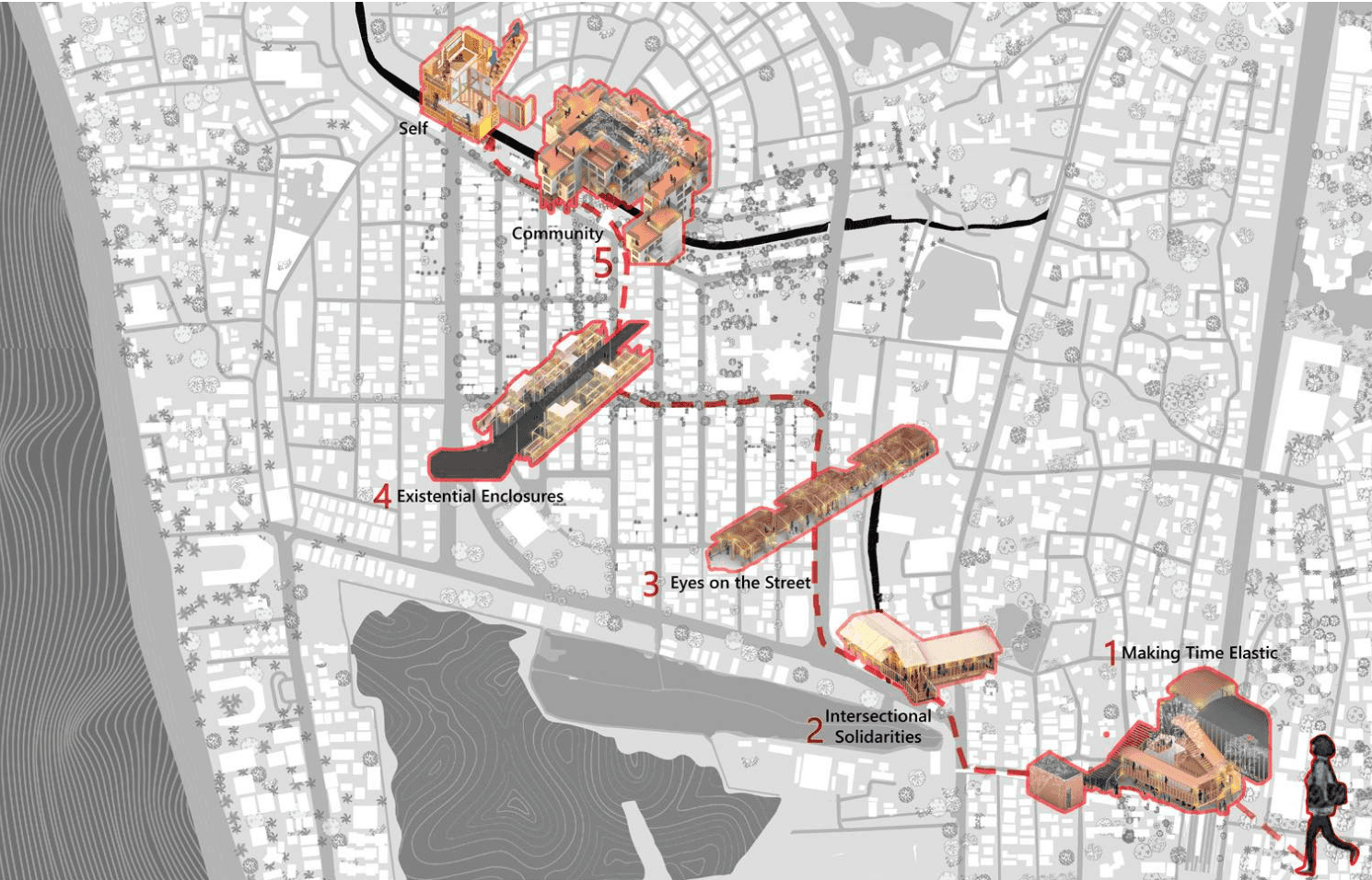
The research led to five design proposals across the JVPD scheme in Juhu, Mumbai, each addressing a different scale of women's urban experience: a housing campus designed around the need for solitude, solidarity, and leisure; a reconfigurable garden reclaiming desolate footpaths; food stalls as activators of safe street life; a daycare as a site of class and caste intersectionality; and a women's washroom pavilion at Vile Parle station that makes pausing in the city possible for feminine bodies.
The thesis concludes that cities need a gender lens not as an afterthought but as a structural condition of how infrastructure, housing, and public space are imagined and built.
Selected for the Women in Design 2020 archive. Presented at the TISS Winter School Conference A Room of One's Own 2020
Category:
City Making, Ways of Dwelling, Futures Thinking, Soft Infrastructures
Client:
School of Environment and Architecture B.Arch
Duration:
1 Year
Location:
Mumbai